
Wingpost Studios / Tug & Tide / Harbour Log
24 November 2026 · Explainer
What does a harbour tug actually do?
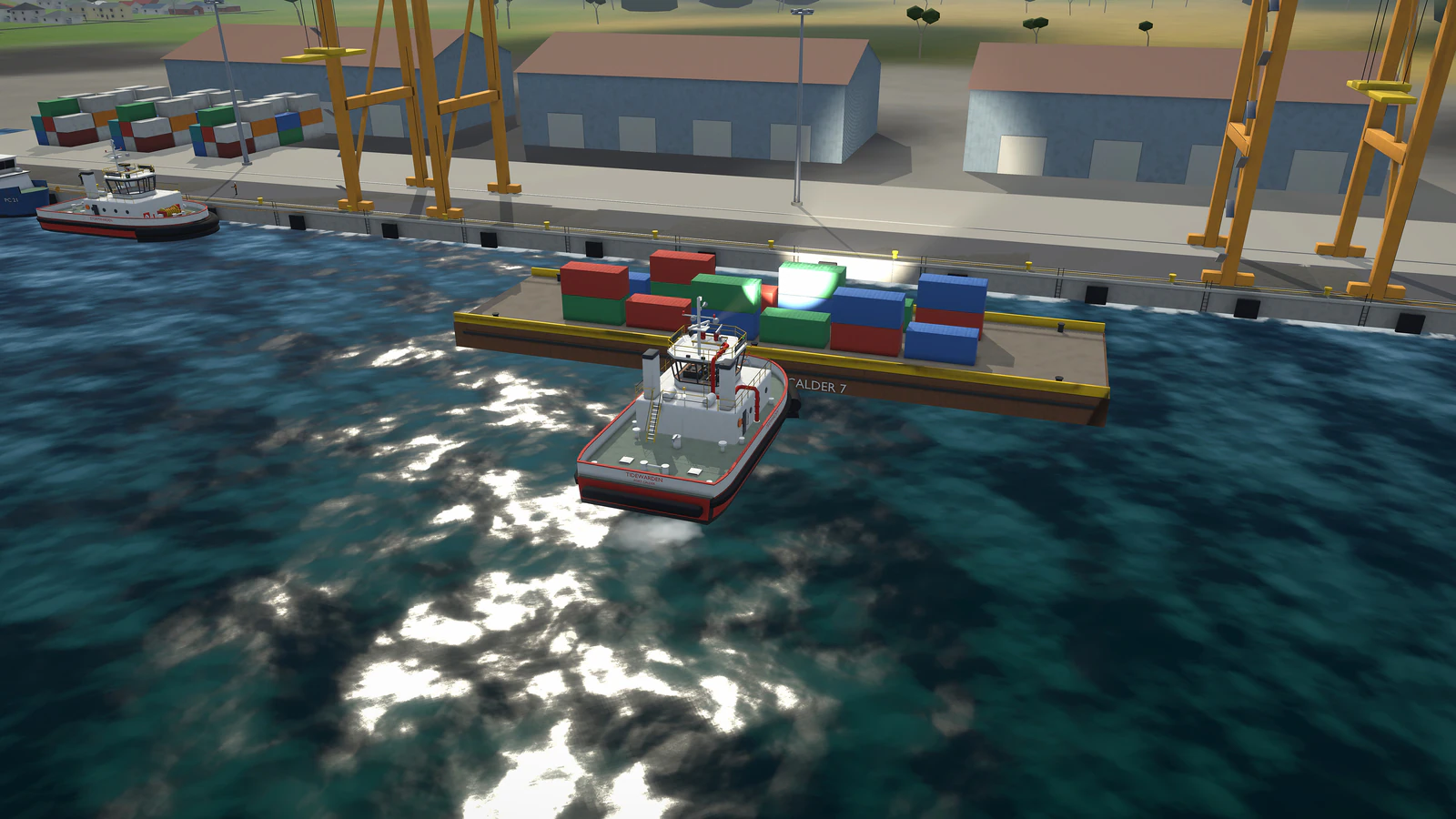
Stand on any busy waterfront for an hour and you'll see them: short, wide, low-sided boats with huge fenders on the bow, nosing up against ships many times their size. Harbour tugs look like the least glamorous boats in port. They're also the ones the port can least do without.
Here's what they're for, how they do it, and why one of them makes such a good place to sit in VR.
The short answer: they move ships that can't move themselves well
A big cargo ship or tanker is built to cross oceans, not to turn in its own length. At the slow speeds needed inside a harbour, its rudder has little water flowing past it, so it steers poorly. Wind pushing on a tall hull or a stack of containers can shove it sideways. Stopping takes a long distance.
So when a large ship arrives or leaves, one or more tugs meet it. They push, pull and hold it so it can turn in tight basins, line up with a narrow entrance and come to rest gently against the quay. That job is called ship assist, or ship-handling, and it's the bread and butter of most harbour tugs.
Who's in charge: the pilot and the tug master
Most ports require a harbour pilot to board big ships. The pilot knows the local channels, currents and berths, and directs the manoeuvre from the ship's bridge. The pilot talks to each tug over the radio: push here, pull there, how hard, and when to stop.
The tug master, the tug's captain, turns those orders into exact movements of the tug, often a few metres from a moving steel hull. It's close, precise, physical work, and it's the heart of the pilot jobs in Tug & Tide, where you follow the pilot's orders as you push a ship or barge alongside.
Pushing and pulling
A tug helps a ship in two basic ways:
- Pushing. The tug puts its padded bow against the ship's side and pushes, for example to press the ship gently onto the berth.
- Pulling on a line. The tug is made fast to the ship with a towline and pulls, either to steer the ship, to slow it, or to haul it off the quay when it leaves.
A tug's pulling strength is measured as its bollard pull: how hard it can pull, in tonnes, while tied to a fixed point and going nowhere. It's the number tug people quote first, because it's the one that matters when a ship has to be held against the wind.
How a tug turns on the spot
Many modern harbour tugs don't have a fixed propeller and rudder like most boats. They have azimuth thrusters: propellers that can each be swung round to push in any direction. With two of them, the tug master can make the tug go sideways, spin on the spot, or stop dead in its own length.
In a real-style wheelhouse, each thruster has its own control head, and the master works both at once. That's exactly the layout in Tug & Tide: grip the two azimuth heads and steer by hand, or switch to a single joystick or the thumbsticks in Settings if you'd rather.
Towing ships that have lost power
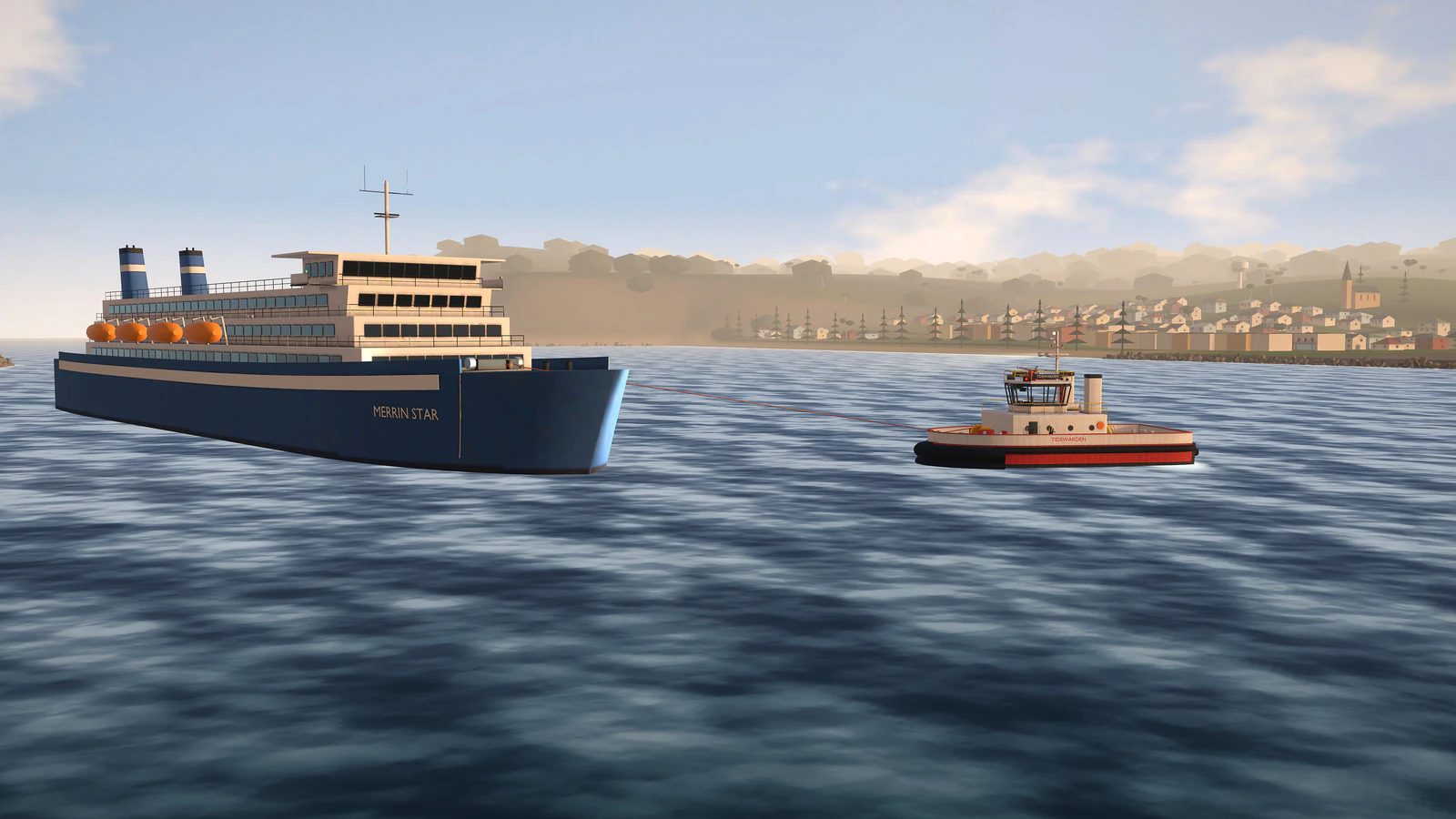
Ships break down. A ship with no engine can't steer, and wind or current will carry it wherever they like, often towards rocks or a quay. Tugs tow these ships to safety, usually on a long line. The length matters: a long, heavy line sags into the water and acts like a spring, softening the jerks as the two vessels pitch in the waves.
Smaller boats get into trouble too. A yacht with a fouled engine on a lee shore, a coast the wind is blowing towards, can be pushed onto the rocks quickly. In the game you'll do both: tow a yacht off a lee shore, and tow a ferry to the anchorage.
Why towing is dangerous for the tug
Tug crews treat the towline with great respect. If a line under load pulls sharply across the side of a tug, instead of along it, it can drag the tug over. Seafarers call this girting (or girding), and modern tugs carry equipment and procedures to prevent it. A line that parts under strain can also whip back with terrible force, which is why crews keep clear of it.
Escort duty
In some ports, tugs escort large tankers and gas carriers through narrow approaches, travelling alongside or tethered behind, ready to steer or brake the ship if its engine or steering fails at the wrong moment.
Fire and rescue
Some tugs carry powerful firefighting pumps and roof-mounted water cannons called fire monitors. A tug fitted this way can attack a fire on a ship or quay from the water, and ship classification societies issue special firefighting notations to vessels with the right equipment. Ports may also have dedicated fireboats. Tugs also join in rescues, pollution response and salvage. For example, they lay a boom, a floating barrier, around an oil spill to stop it spreading.
That's the corner of tug work Tug & Tide is built around. You're the master of Tide One, the harbour's fire-and-rescue tug. You aim the monitors onto a burning trawler, switch to foam for fuel fires, throw a heaving line to someone in the water, ring an oil spill with a boom and stop a blacked-out ship before she hits the quay.
This article is a general explainer, not training. In a real emergency on or near the water, call your local emergency services.
Why a tug wheelhouse works so well in VR
A tug does its hardest work slowly, close up, with the master's hands on the controls and eyes on the ship alongside. That suits seated virtual reality perfectly. You don't need to walk anywhere, you're in a chair, and every job is about reaching for the right control at the right moment.
Tug & Tide keeps the wheelhouse steady even in a storm swell (the waves move, your view doesn't roll or pitch), so you get the feel of the job without the seasickness. More on that in the support FAQ.
In short
- Harbour tugs push, pull and steer big ships that handle poorly at low speed.
- The pilot gives the orders; the tug master makes them happen.
- Bollard pull measures a tug's strength; azimuth thrusters let it move in any direction.
- Tugs also tow broken-down ships, escort tankers, fight fires and help with spills and rescues.
Tug & Tide: Fireboat Rescue is out now on Meta Quest 3 and 3S for US$19.99. Get it on the Meta Horizon Store, or see what the job involves.